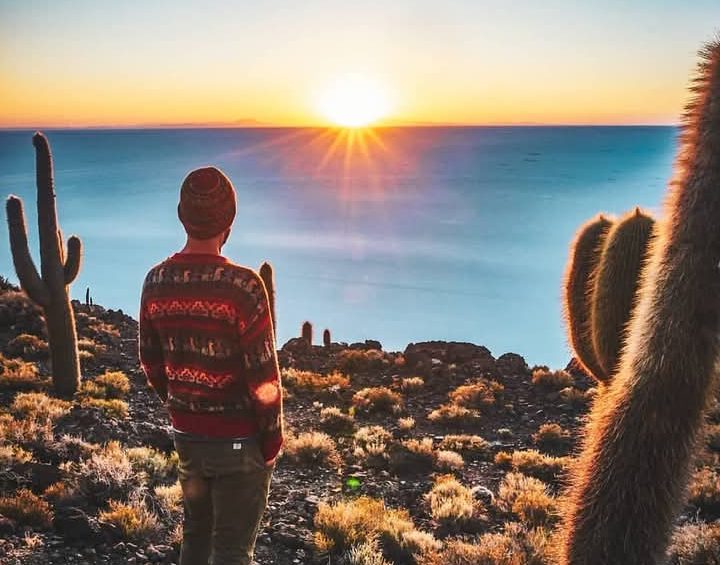
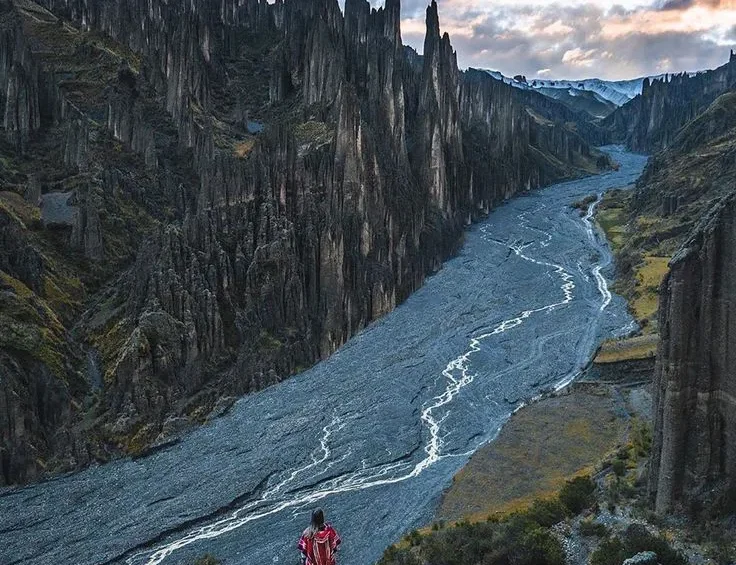
Tour of Moon Valley and Souls Valley (Valle de las Animas and Valle de la Luna
The Ultimate La Paz Day-Trip
Skip the standard city tour and spend a day exploring the otherworldly geology hiding right in La Paz’s backyard. This itinerary takes you from the deep clay labyrinths of the south valley to the towering, mystical peaks of the high altiplano.
The Valley of the Moon (Valle de la Luna) is a protected natural wonder that invites you to step off the planet without ever leaving Bolivia.
Legend has it that after historic footsteps on the lunar surface, astronaut Neil Armstrong visited this very spot. Stunned by the surreal topography, he remarked that it looked exactly like the jagged craters he had seen on the moon. Embracing this cosmic seal of approval, La Paz transformed the area into one of its most captivating tourist destinations.
This mesmerizing maze wasn’t built by hands, but by the patient brush of time. Over thousands of years, relentless winds and rains slowly eroded the clay-and-sand mountainside, carving out a spectacular labyrinth of towering stalagmites, deep crevices, and pale, ghostly chimneys.
Today, you can wander along its scenic walking trails, marvel at how the shifting daylight changes the colors of the clay, and experience a truly celestial landscape right here on Earth. It’s a must-see highlight of any journey to La Paz!
The Geological Reality of Valle de las Ánimas
The towering spires of Valle de las Ánimas (Valley of the Souls) are not the result of a single “melting glacier millions of years ago,” nor are they made of simple “mud-rock.”
The landscape is a classic example of badland topography formed by differential erosion.
- The Material: The spires are composed of poorly consolidated glacial moraine deposits—a chaotic mix of gravel, sand, silt, and clay left behind by retreating glaciers during the Pleistocene epoch.
- The Process: As the glaciers retreated, they deposited massive alluvial fans. Over hundreds of thousands of years, rainwater and wind carved into these soft, weakly cemented sediments.
- The Spires: The structures survive because harder rocks or compacted layers acts as a temporary “cap,” protecting the softer material directly beneath them from vertical rainfall. As the surrounding unprotected material washes away into the valley floor, these dramatic, sharp pinnacles are left standing.